When you run a textile printing unit, rotary screens are one of your biggest assets. They decide how sharp your designs look, how smoothly production runs, and how much money you spend on replacements.
The NovaJet 3500 is designed to take care of those screens in a safer, cleaner and more predictable way.
In this first part of the NovaJet blog series, we’ll answer two simple questions:
- What exactly is the NovaJet 3500?
- Why does it matter to your mill, your people and the environment?
The Problem: How Rotary Screens Were Cleaned Earlier
Traditionally, recycling rotary printing screens meant using strong acidic chemicals.
These were often:
- Acid-based mixtures (like chromic or chloric acids)
- Sometimes mixed with phenols
- Highly corrosive and known to be harmful for health
This old method created three major issues:
- 1.Risk to workers
Operators had to work around fumes, splashes and chemical handling. Even with safety gear, there was always a worry at the back of the mind. - 2.Damage to screens
These acids don’t only attack the emulsion layer – over time, they also attack the nickel screen itself. Screens become thinner, weaker and more prone to damage. - 3.Regulatory and buyer pressure
Many global markets have already moved away from such chemicals. Some of these substances have been banned in Europe for years, and large brands prefer suppliers who use cleaner, safer processes.
So mills have been asking:
“Is there a way to recycle our screens without all these chemicals?”
Meet the NovaJet 3500: Screen Recycling with the Power of Water
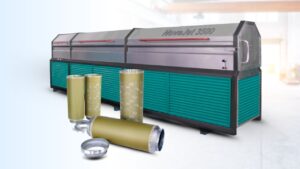
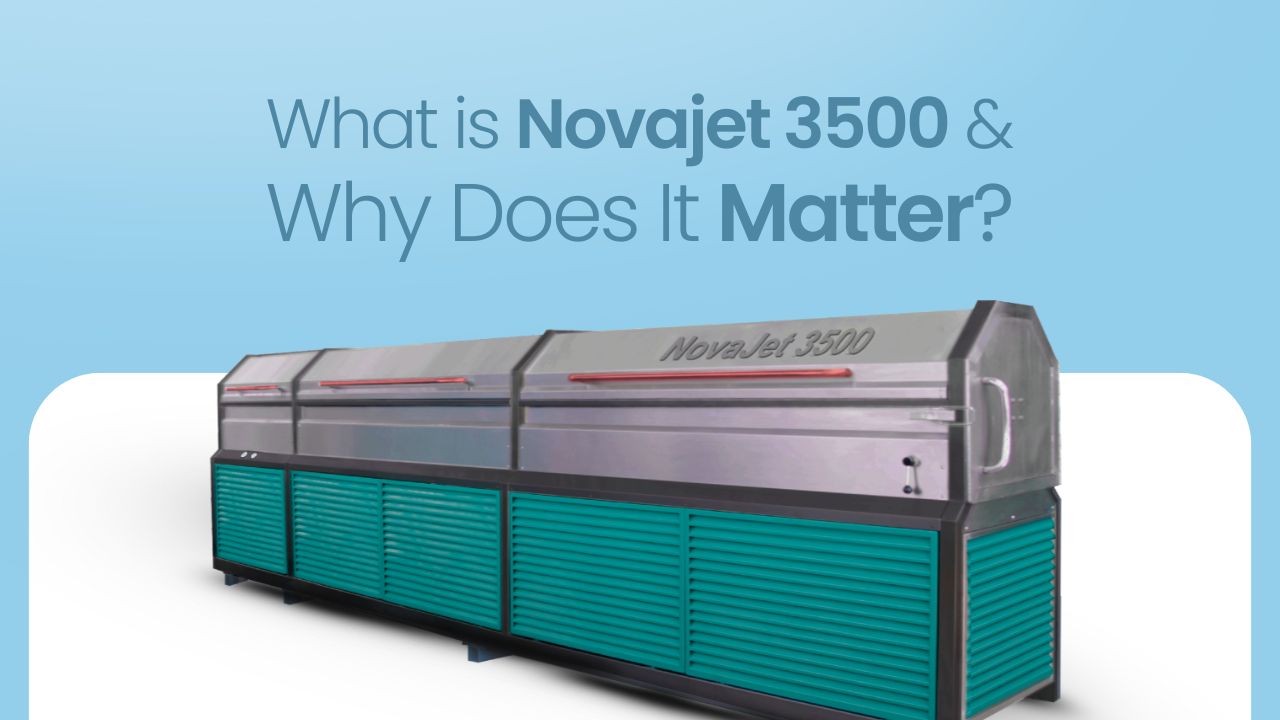
The NovaJet 3500 is a screen recycling system that uses ultra-high-pressure water instead of harsh chemicals to strip used rotary printing screens.
In simple words:
It is a machine that cleans and recycles rotary screens using only high-pressure water – no acids, no phenols.
Here’s what it does:
- Loads a used rotary screen
- Uses controlled, ultra-high-pressure water jets to remove the old emulsion
- Leaves the nickel screen clean and ready for a fresh coat of emulsion
- All this happens in a fully enclosed, automated process
You still get a clean, reusable screen – but without exposing your team or your factory to dangerous chemicals.
Why the NovaJet 3500 Matters
1.Chemical-Free and Safer for Your Team
The biggest shift with NovaJet 3500 is simple:
No hazardous stripping chemicals.
That means:
- Operators don’t have to handle corrosive acids.
- There is no toxic stripping bath to mix, store or dispose.
- The working area becomes cleaner and safer.
For mill owners and production managers, this directly reduces everyday risk and makes it easier to comply with safety standards.
2.Kinder to the Environment
Because the NovaJet 3500 works on water-based stripping:
- Your process no longer relies on chemical baths that are difficult and expensive to treat.
- You reduce the load on your effluent treatment system.
- You cut down the chance of accidental spills or unsafe disposal.
Across all installed NovaJet machines worldwide, this clean process is helping mills avoid tens of thousands of litres of hazardous chemicals every month. That’s a strong sustainability story to tell to buyers and auditors.
3.Faster and More Predictable in Production
In a busy mill, time is always under pressure. Screen preparation and recycling must keep up with printing – not slow it down.
The NovaJet 3500 is designed to fit into your production rhythm:
- Each screen is stripped in a short, repeatable cycle.
- Settings are controlled from a panel, so results are consistent.
- You can plan how many screens will be ready in a shift, instead of guessing.
This removes a common headache: waiting on screens and juggling production because the recycling process is delayed.
4.Better Life and Lower Cost per Screen
Acid-based stripping slowly eats into the nickel surface, even if you can’t see it immediately. Over time:
- Screens become fragile.
- They are more likely to break during mounting or printing.
- You end up buying new screens sooner than you should.
With the NovaJet 3500:
- Ultra-high-pressure water focuses on the emulsion layer.
- The nickel screen underneath is not corroded by chemicals.
- You can recycle the same screen more times.
Quick Summary: What You Should Remember
If you had to explain NovaJet 3500 to someone in one minute, you could say:
- It is a screen recycling machine for rotary printing screens.
- It uses only high-pressure water, not strong acids.
- It creates a safer workplace for operators.
- It is better for the environment and easier to justify to buyers and auditors.
- It helps extend screen life and keep your production more predictable.
What’s Coming Next in This Series
This was Part 1: What Is the NovaJet 3500 and Why Does It Matter?
In Part 2, we’ll go a level deeper and talk about:
“From Harsh Chemicals to Pure Water: Why Mills Are Switching to NovaJet 3500”
We’ll compare the old acid-based method and the NovaJet water-based method in plain language, so you can clearly see the difference in safety, costs and compliance.